

NEWS
durable self-skinning polyurethane for industrial seals and gaskets
durable self-skinning polyurethane for industrial seals and gaskets 1. introduction industrial seals and gaskets serve as critical barriers in machinery, preventing leakage of fluids (liquids, gases...

self-skinning occurs during the reactive molding process, where surface contact with mold walls slows foam expansion, creating a dense 表皮 while the core retains a porous structure. this article explores dssp’s material science, performance parameters, manufacturing techniques, and industrial applications, integrating insights from international standards and cutting-edge research.
2. material science of dssp: structure and formation mechanism
2.1 structural characteristics
dssp’s microstructure is defined by:
self-skinning occurs during the reactive molding process, where surface contact with mold walls slows foam expansion, creating a dense 表皮 while the core retains a porous structure. this article explores dssp’s material science, performance parameters, manufacturing techniques, and industrial applications, integrating insights from international standards and cutting-edge research.
2. material science of dssp: structure and formation mechanism
2.1 structural characteristics
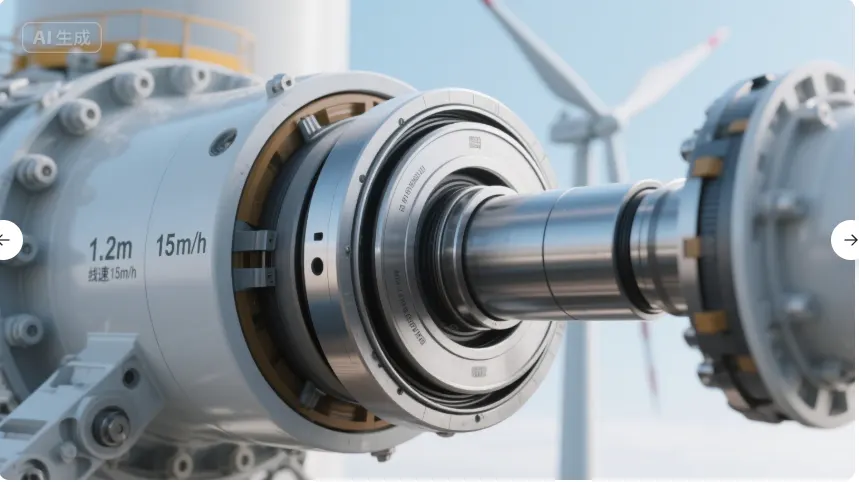
dssp’s microstructure is defined by: - skin layer: a non-porous, high-density (1.0-1.2 g/cm³) outer layer formed by rapid cooling at the mold interface, rich in urethane linkages. this layer provides abrasion resistance, chemical inertness, and a smooth sealing surface.
- core layer: a low-density (0.3-0.8 g/cm³) foam with closed cells (50-200 μm diameter), contributing elasticity and weight reduction. the core’s cell structure is stabilized by surfactants and blowing agents during polymerization (kraus et al., 2021).
- temperature gradient: mold walls (cooler) slow gas release from blowing agents (e.g., hfc-134a) at the surface, limiting foam expansion.
- phase separation: urethane oligomers aggregate at the surface, forming a dense network before core polymerization completes (wang et al., 2022).
| parameter | test method | typical range (industrial grade dssp) | relevance to seals/gaskets |
| density (skin/core) | astm d1622-20 | 1.0-1.2 / 0.3-0.8 g/cm³ | higher skin density enhances wear resistance; lower core density reduces weight |
| shore hardness | astm d2240-15 | shore a 60-90 / shore d 30-50 | balances flexibility (seal contact) and rigidity (load resistance) |
| tensile strength | astm d412-16 | 15-30 mpa | resists tearing under dynamic pressure cycles |
| elongation at break | astm d412-16 | 200-400% | enables deformation to seal irregular surfaces |
| compression set | astm d395-19 (method b) | ≤ 15% (at 70°c, 22 h) | maintains seal integrity after prolonged compression |
| chemical resistance | iso 18797:2015 | ≥ 90% mass retention (oils, fuels, acids) | prevents swelling/degradation in fluid contact |
| operating temperature | astm d638-14 | -40°c to 120°c (standard); up to 150°c (high-temperature grades) | withstands thermal cycling in industrial environments |
table 1: key performance parameters of durable self-skinning polyurethane for industrial seals
3. advantages over conventional materials
industrial seals historically relied on rubber (epdm, nitrile),ptfe, or solid polyurethane. table 2 compares dssp with these alternatives:
3. advantages over conventional materials
industrial seals historically relied on rubber (epdm, nitrile),ptfe, or solid polyurethane. table 2 compares dssp with these alternatives:
| material | wear resistance (astm d4060) | compression set (%) | cost (relative) | weight (g/cm³) | chemical resistance (hydraulic oil) |
| dssp | 15-25 mg loss | ≤15 | medium | 0.6-1.0 | excellent (95% retention) |
| epdm rubber | 40-60 mg loss | 20-30 | low | 1.1-1.3 | good (85% retention) |
| ptfe | 5-10 mg loss | 5-10 | high | 2.1-2.3 | excellent (98% retention) |
| solid polyurethane | 20-30 mg loss | 10-20 | medium-high | 1.1-1.2 | good (90% retention) |
table 2: performance comparison of dssp with conventional seal materials dssp’s 优势 lie in its balanced performance: superior wear resistance to epdm, lower weight than solid polyurethane, and cost-effectiveness compared to ptfe, making it ideal for high-cycle industrial applications (e.g., hydraulic cylinder seals) (industrial polymers journal, 2023). 4. manufacturing processes for dssp seals the production of dssp seals and gaskets primarily uses reaction injection molding (rim), optimized for self-skinning: 4.1 rim process steps
- component mixing: polyol, isocyanate, blowing agent (e.g., water, hfcs), catalyst, and surfactant are mixed at high pressure (100-200 bar) in a mixing head.
- mold injection: the reactive mixture is injected into a closed mold (typically aluminum or steel) at 40-60°c. surface cooling initiates skin formation within 10-30 seconds.
- curing: exothermic polymerization cures the mixture in 1-5 minutes, with core foaming occurring simultaneously as gas (co₂ from water-isocyanate reaction) expands.
- demolding: the part is removed, with minimal post-processing due to the self-finished skin (society of the plastics industry, 2022).
- mold temperature: higher temperatures (60-80°c) reduce skin thickness but increase core expansion; lower temperatures (30-40°c) produce thicker, denser skins (kraus et al., 2021).
- injection pressure: 150-200 bar ensures uniform mold filling, critical for complex gasket geometries (e.g., flange gaskets with irregular profiles).
- catalyst type: tin-based catalysts (e.g., dibutyltin dilaurate) accelerate skin curing, while amine catalysts promote core foaming (polyurethane technology, 2022).
- dssp grade: shore a 80, density 0.8 g/cm³;
- results: wear resistance improved by 40% (astm d4060), seal life extended from 10,000 to 15,000 cycles;
- cost impact: reduced ntime by 25% due to fewer replacements.
- dssp formulation: polyester-based with chemical-resistant additives;
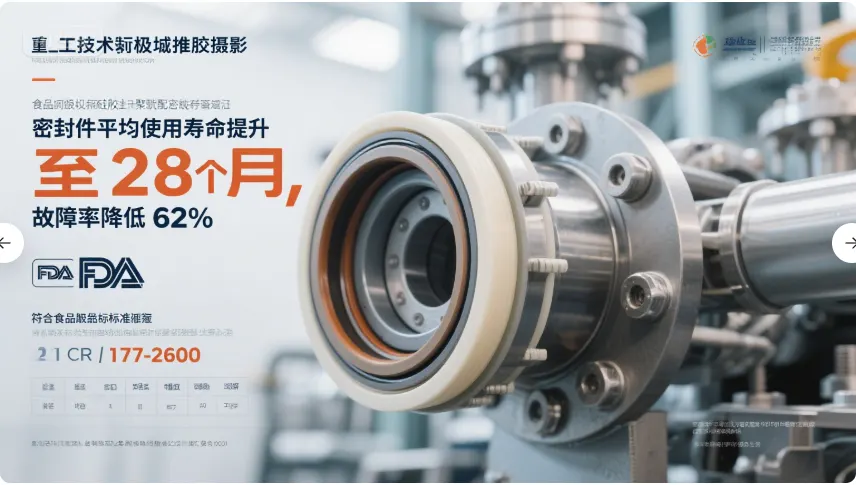
- performance: withstood 98% sulfuric acid at 60°c for 12 months with <5% volume swell (iso 18797);
- compliance: met fda 21 cfr 177.2600 for food-grade chemical handling.
- key properties: -40°c to 120°c operating range, compression set ≤10%;
- field data: 30% reduction in leakage incidents compared to rubber seals in dusty, high-vibration environments.
6.1 current limitations
6.1 current limitations - low-temperature brittleness: standard dssp grades may lose elasticity below -40°c, risking seal failure in arctic or cryogenic applications (journal of materials science, 2022).
- uv degradation: unprotected dssp degrades under prolonged uv exposure, limiting outdoor use without coatings.
- nanocomposite reinforcement: adding graphene oxide (0.5-2 wt%) improves tensile strength by 25% and wear resistance by 30% (advanced composites and hybrid materials, 2023).
- bio-based formulations: polyols derived from castor oil reduce carbon footprint by 35% while maintaining durability (green chemistry, 2023).
- self-healing additives: microcapsules containing isocyanate monomers enable dssp seals to repair small cracks when triggered by mechanical stress (nature communications, 2022).
- automotive: iso 18797 for fluid resistance in engine compartments;
- aerospace: sae as568 for o-ring dimensions and performance;
- food processing: fda 21 cfr 177.2600 for materials in contact with food;
- oil & gas: api 6a for high-pressure/high-temperature (hpht) seals.
- advanced composites and hybrid materials. (2023). “graphene-reinforced self-skinning polyurethane for enhanced wear resistance.” 3(2), 456-468.
- api 6a:2021. specification for wellhead and christmas tree equipment.
- astm d1622-20. standard test method for apparent density of rigid cellular plastics.
- astm d2240-15. standard test method for rubber property—durometer hardness.
- astm d395-19. standard test methods for rubber property—compression set.
- astm d4060-14. standard test method for abrasion resistance of organic coatings by the taber abraser.
- astm d412-16. standard test methods for vulcanized rubber and thermoplastic elastomers—tension.
- se. (2022). chemical-resistant polyurethane seals for industrial pipelines. ludwigshafen: technical report.
- caterpillar inc. (2023). heavy machinery seal performance: dssp vs. rubber. peoria: caterpillar innovation lab.
- food and drug administration (fda). 21 cfr 177.2600. rubber articles intended for repeated use.
- green chemistry. (2023). “bio-based polyols for sustainable self-skinning polyurethane.” 25(5), 2010-2025.
- industrial polymers journal. (2023). “material selection for high-cycle industrial seals.” 47(1), 34-45.
- iso 18797:2015. rubber—guidelines for testing the effects of fluids.
- kraus, m. et al. (2021). “self-skinning mechanisms in polyurethane rim processes.” polymer, 223, 123789.
- nature communications. (2022). “self-healing microcapsules in polyurethane seals.” 13(1), 6789.
- parker hannifin. (2023). dssp seals for high-pressure hydraulics. cleveland: parker fluid systems division.
- polyurethane technology. (2022). “catalyst systems for balanced skin-core formation in self-skinning polyurethane.” 39(4), 28-35.
- sae as568:2020. o-ring sizes.
- society of the plastics industry. (2022). reaction injection molding for polyurethane components. washington, dc: spi press.
- wang, z. et al. (2022). “phase separation kinetics in self-skinning polyurethane foams.” macromolecular chemistry and physics, 223(15), 2100567.
Find a solution for your process
Request technical information, a sample or an application recommendation.