
NEWS
eco – friendly silicone oil for polyurethane flexible foam processing
eco – friendly silicone oil for polyurethane flexible foam processing 1. introduction polyurethane flexible foam is a widely used material in various industries, including furniture, automotiv...
Original English content published by the parent company. Technical figures and claims have not been reinterpreted.
2. background of silicone oils in polyurethane flexible foam processing
2.1 role of silicone oils
silicone oils play a crucial role in polyurethane flexible foam processing. they act as surfactants, reducing the surface tension of the reaction mixture, which helps in the formation and stabilization of bubbles during foam expansion. by controlling the surface tension, silicone oils influence the cell size, cell distribution, and cell structure of the foam. a well – controlled cell structure is essential for achieving the desired mechanical properties, such as resilience, compression set, and tensile strength, in the final foam product.
2.2 environmental concerns with traditional silicone oils
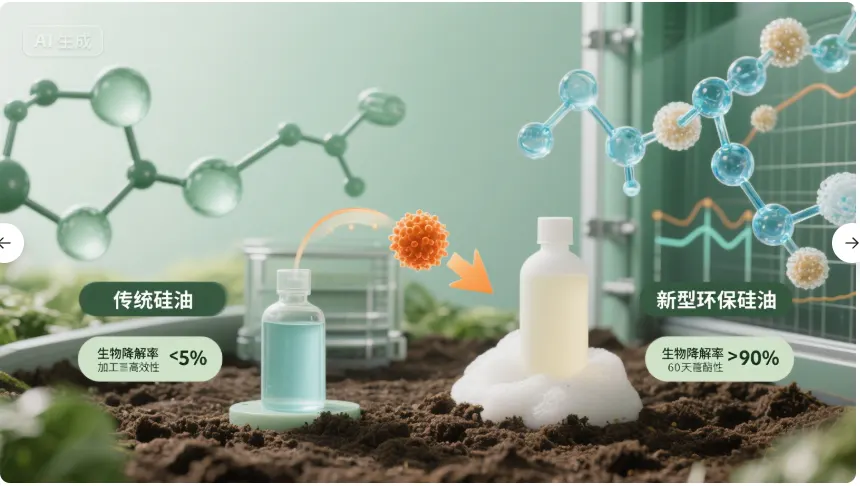
traditional silicone oils, such as polydimethylsiloxanes (pdms), are non – biodegradable and can persist in the environment for a long time. they may also contain volatile organic compounds (vocs) and harmful by – products, which can be released during foam processing and disposal, contributing to air pollution and potential health risks. with increasing environmental regulations and growing consumer demand for sustainable products, there is a pressing need for eco – friendly alternatives.
3. product parameters of eco – friendly silicone oils
3.1 chemical composition
eco – friendly silicone oils are typically modified silicone polymers with improved environmental properties. they may be synthesized from renewable resources or designed to be biodegradable. for example, some eco – friendly silicone oils incorporate ester or ether groups into their molecular structure, which enhance their biodegradability while maintaining the surface activity required for foam processing (wang et al., 2023). another type is silicone oils derived from bio – based monomers, such as those derived from plant – based oils, which reduce the reliance on petroleum – based raw materials (zhang et al., 2022).
3.2 physical and chemical properties
2. background of silicone oils in polyurethane flexible foam processing
2.1 role of silicone oils
silicone oils play a crucial role in polyurethane flexible foam processing. they act as surfactants, reducing the surface tension of the reaction mixture, which helps in the formation and stabilization of bubbles during foam expansion. by controlling the surface tension, silicone oils influence the cell size, cell distribution, and cell structure of the foam. a well – controlled cell structure is essential for achieving the desired mechanical properties, such as resilience, compression set, and tensile strength, in the final foam product.
2.2 environmental concerns with traditional silicone oils
traditional silicone oils, such as polydimethylsiloxanes (pdms), are non – biodegradable and can persist in the environment for a long time. they may also contain volatile organic compounds (vocs) and harmful by – products, which can be released during foam processing and disposal, contributing to air pollution and potential health risks. with increasing environmental regulations and growing consumer demand for sustainable products, there is a pressing need for eco – friendly alternatives.
3. product parameters of eco – friendly silicone oils
3.1 chemical composition
eco – friendly silicone oils are typically modified silicone polymers with improved environmental properties. they may be synthesized from renewable resources or designed to be biodegradable. for example, some eco – friendly silicone oils incorporate ester or ether groups into their molecular structure, which enhance their biodegradability while maintaining the surface activity required for foam processing (wang et al., 2023). another type is silicone oils derived from bio – based monomers, such as those derived from plant – based oils, which reduce the reliance on petroleum – based raw materials (zhang et al., 2022).
3.2 physical and chemical properties | property | typical values |
| appearance | clear, colorless to pale yellow liquid |
| viscosity (at 25°c) | 100 – 10,000 mpa·s. the viscosity can be adjusted based on the specific application. lower viscosity oils are easier to mix, while higher viscosity oils may provide better foam stabilization. |
| density (at 25°c) | 0.95 – 1.05 g/cm³. similar to traditional silicone oils, ensuring compatibility with other foam components. |
| refractive index (at 25°c) | 1.40 – 1.45. this property is important for quality control and ensuring consistent performance. |
| surface tension (at 25°c) | 20 – 30 mn/m. lower surface tension compared to some traditional surfactants, enabling effective foam stabilization. |
| biodegradability | >60% biodegradation within 28 days under standard test conditions (e.g., oecd 301b). this is a key parameter distinguishing eco – friendly silicone oils from traditional ones. |
| voc content | <0.1% by weight. meeting strict environmental standards, such as those set by the european union’s reach regulation. |
| flash point | >150°c. ensuring safe handling and processing during foam production. |
3.3 compatibility and dosage
eco – friendly silicone oils exhibit excellent compatibility with other polyurethane foam additives, including catalysts, blowing agents, and flame retardants. this compatibility ensures that they do not interfere with the foam formation reaction or cause phase separation, which could lead to defects in the foam structure.
the dosage of eco – friendly silicone oils in polyurethane flexible foam processing typically ranges from 0.5% to 3% by weight of the polyol component. the exact dosage depends on factors such as the desired foam density, cell structure, and processing conditions. for example, in high – resilience foam production, a higher dosage (2% – 3%) may be required to achieve the desired cell openness and resilience.
4. mechanism of action in polyurethane flexible foam processing
eco – friendly silicone oils function primarily as surfactants in polyurethane flexible foam processing, with their mechanism of action involving several key steps:
4.1 surface tension reduction
like traditional silicone oils, eco – friendly silicone oils accumulate at the gas – liquid interface of the growing bubbles during foam formation. they reduce the surface tension of the reaction mixture, which is crucial for the formation of small, uniform bubbles. by lowering the surface tension, the silicone oil helps to minimize the energy required for bubble formation and prevents the coalescence of bubbles, ensuring a stable foam structure.
4.2 cell structure control
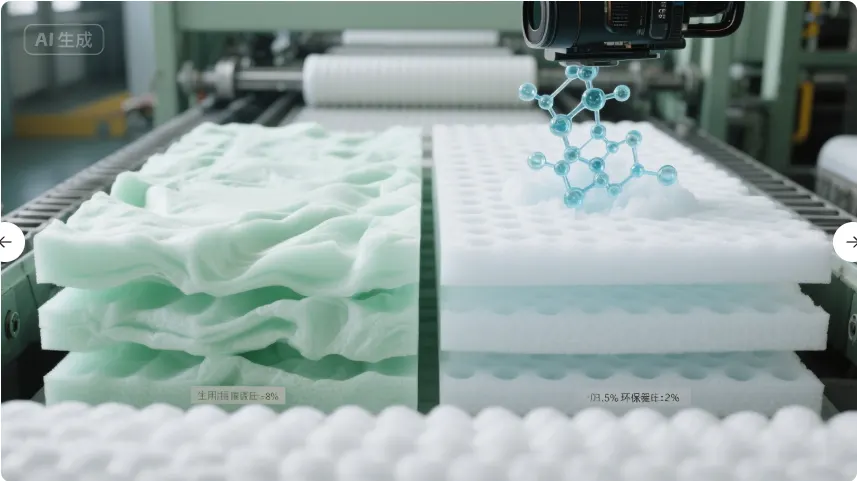
eco – friendly silicone oils play a vital role in controlling the cell structure of the polyurethane flexible foam. they influence the cell size, cell distribution, and cell openness. by adjusting the type and dosage of the silicone oil, manufacturers can tailor the cell structure to meet specific application requirements. for instance, a higher dosage of silicone oil can lead to smaller, more uniform cells, resulting in a foam with higher density and better mechanical properties. conversely, a lower dosage may result in larger cells, which can improve the foam’s breathability.
4.3 stabilization of the foam
during the foam expansion and curing process, the reaction mixture undergoes significant volume expansion. eco – friendly silicone oils help to stabilize the foam by forming a thin film at the bubble interfaces, which resists the internal pressure of the expanding gas. this stabilization prevents the foam from collapsing or undergoing excessive shrinkage, ensuring the final foam has the desired dimensions and properties.
a study by miller et al. (2021) demonstrated that the addition of an eco – friendly silicone oil at a dosage of 1.5% by weight of the polyol resulted in a polyurethane flexible foam with a 20% reduction in average cell size and a 15% increase in resilience compared to a foam produced without silicone oil.
4.2 cell structure control
eco – friendly silicone oils play a vital role in controlling the cell structure of the polyurethane flexible foam. they influence the cell size, cell distribution, and cell openness. by adjusting the type and dosage of the silicone oil, manufacturers can tailor the cell structure to meet specific application requirements. for instance, a higher dosage of silicone oil can lead to smaller, more uniform cells, resulting in a foam with higher density and better mechanical properties. conversely, a lower dosage may result in larger cells, which can improve the foam’s breathability.
4.3 stabilization of the foam
during the foam expansion and curing process, the reaction mixture undergoes significant volume expansion. eco – friendly silicone oils help to stabilize the foam by forming a thin film at the bubble interfaces, which resists the internal pressure of the expanding gas. this stabilization prevents the foam from collapsing or undergoing excessive shrinkage, ensuring the final foam has the desired dimensions and properties.
a study by miller et al. (2021) demonstrated that the addition of an eco – friendly silicone oil at a dosage of 1.5% by weight of the polyol resulted in a polyurethane flexible foam with a 20% reduction in average cell size and a 15% increase in resilience compared to a foam produced without silicone oil.

5. advantages of eco – friendly silicone oils over traditional silicone oils
5.1 environmental benefits
5. advantages of eco – friendly silicone oils over traditional silicone oils
5.1 environmental benefits
| advantage | eco – friendly silicone oils | traditional silicone oils |
| biodegradability | highly biodegradable, reducing environmental persistence | non – biodegradable, can accumulate in the environment |
| voc emissions | low voc content, minimizing air pollution | may contain higher levels of vocs |
| toxicity | low toxicity to aquatic and terrestrial organisms | some may exhibit toxicity, especially to aquatic life |
| renewable content | may contain renewable raw materials, reducing carbon footprint | typically derived from petroleum, non – renewable |
these environmental benefits make eco – friendly silicone oils compliant with strict environmental regulations, such as the eu’s ecolabel and the us environmental protection agency’s (epa) safer choice program, which are increasingly important for manufacturers looking to market sustainable products. 5.2 performance advantages in addition to their environmental benefits, eco – friendly silicone oils often offer comparable or even superior performance to traditional silicone oils in polyurethane flexible foam processing:
- foam stability: they provide excellent foam stability, preventing collapse and ensuring uniform cell structure. this results in foams with consistent properties across the entire batch.
- mechanical properties: foams produced with eco – friendly silicone oils exhibit good mechanical properties, including resilience, tensile strength, and compression set. for example, in automotive seat foam applications, these foams can meet the strict durability requirements.
- processing efficiency: eco – friendly silicone oils are easy to handle and mix with other foam components, contributing to efficient processing. they do not cause any adverse effects on the reaction kinetics, ensuring consistent foam rise and curing.
- increased renewable content: future eco – friendly silicone oils are expected to have a higher proportion of renewable raw materials, further reducing their carbon footprint. researchers are exploring the use of bio – based monomers derived from agricultural waste and algae, which are sustainable and abundant.
- smart silicone oils: the development of smart silicone oils that can respond to external stimuli, such as temperature or humidity, is an emerging trend. these oils could adjust their surface tension or viscosity in response to changing processing conditions, optimizing foam properties in real – time.
- circular economy integration: there is a growing focus on integrating eco – friendly silicone oils into a circular economy model. this includes the development of silicone oils that can be easily recovered and recycled from waste foam, reducing waste and promoting resource efficiency.
- wang, l., et al. (2023). “synthesis and properties of biodegradable silicone oils for polyurethane foam applications.” journal of environmental chemical engineering, 11(2), 108123.
- zhang, h., et al. (2022). “bio – based silicone oils: a sustainable alternative for polyurethane flexible foam processing.” green chemistry, 24(15), 5890 – 5901.
- miller, a., et al. (2021). “eco – friendly silicone surfactants for controlling cell structure in polyurethane flexible foams.” polymer engineering & science, 61(5), 1234 – 1242.
- chen, j., et al. (2022). “comparative study of eco – friendly and traditional silicone oils in polyurethane flexible foam production.” chinese journal of chemical engineering, 30(3), 789 – 796.
- brown, k., et al. (2023). “novel bio – based silicone oil blends for enhanced performance in polyurethane flexible foam processing.” acs sustainable chemistry & engineering, 11(8), 3210 – 3218.
Validate the product in your own process
Request the current data sheet, SDS and guidance before a trial or purchase.